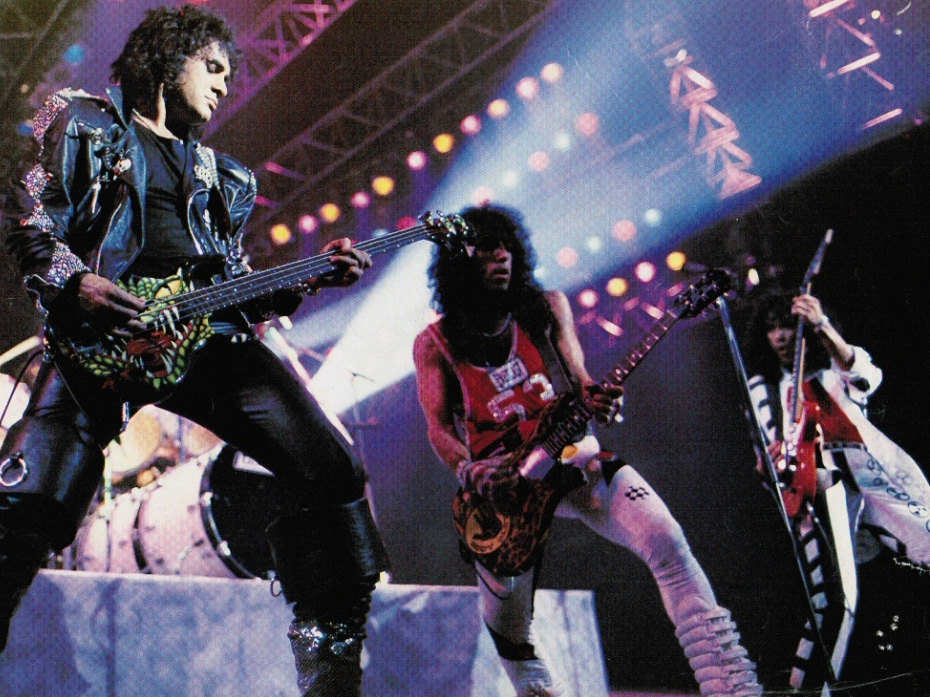
Richfield, Ohio January 15, 1988
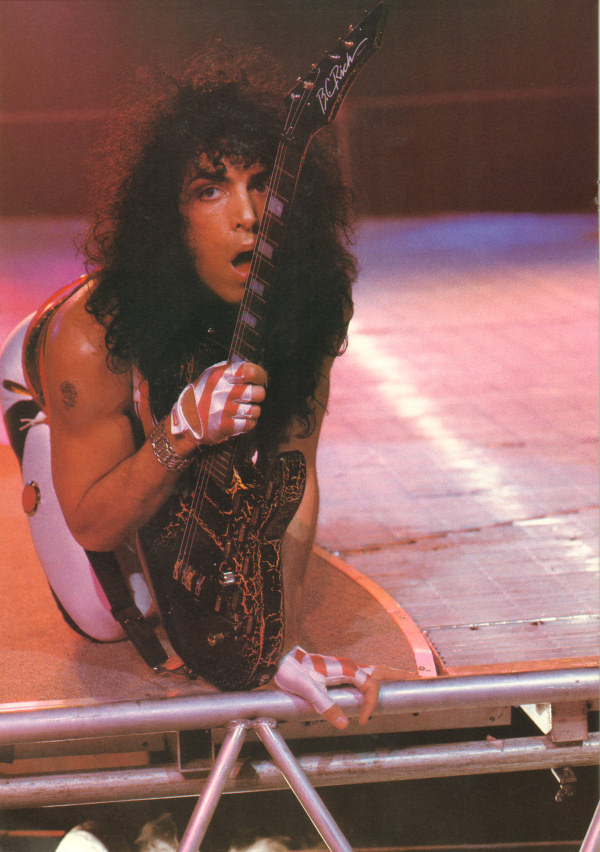
Photo by Joe Marshall
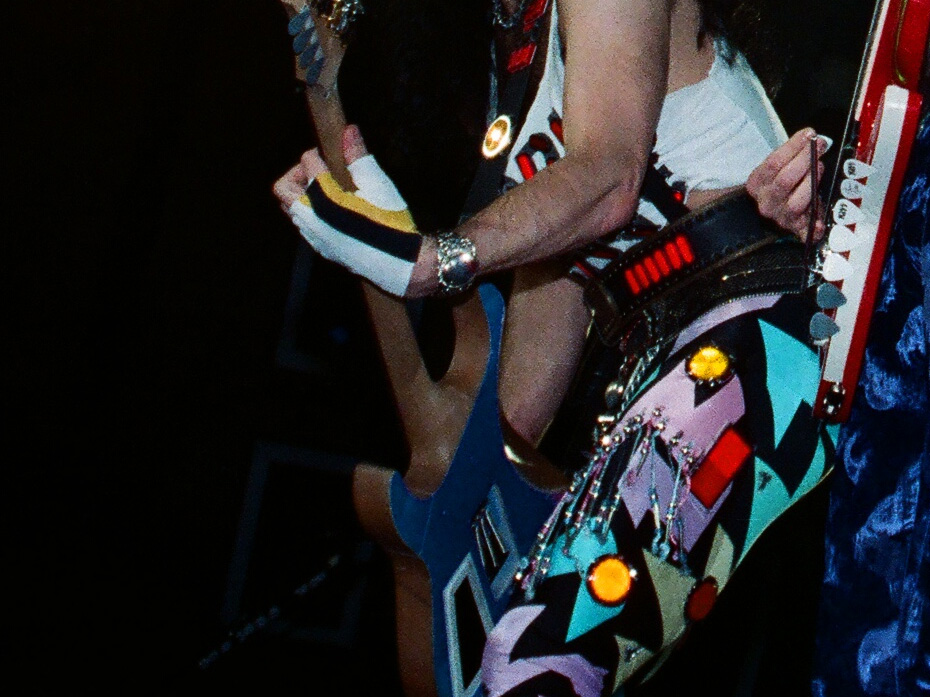
As always we begin with some housekeeping. The super-strat B.C. Rich guitars that Paul played during the Crazy Nights Tour were neither Gunslingers nor ST-III, they were custom guitars made specifically for Paul. I've chosen to call these Gunslingers because the body shape of most of them most resembled that model—the ST had much more rounded edges. But all of Paul's guitars were neck-through construction and both the Gunslinger and ST were bolt-ons. I've also chosen to call them Gunslingers because I don't want to write phrases like "army graphic custom strat-style" more often than I have to. And with that out of the way, let's open a huge can of worms and look at the three versions used in 1987-88 (and one dark horse).
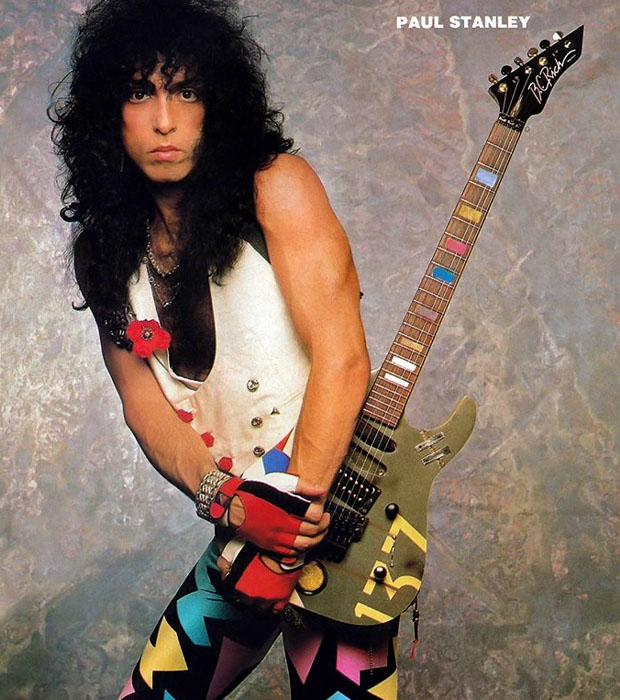
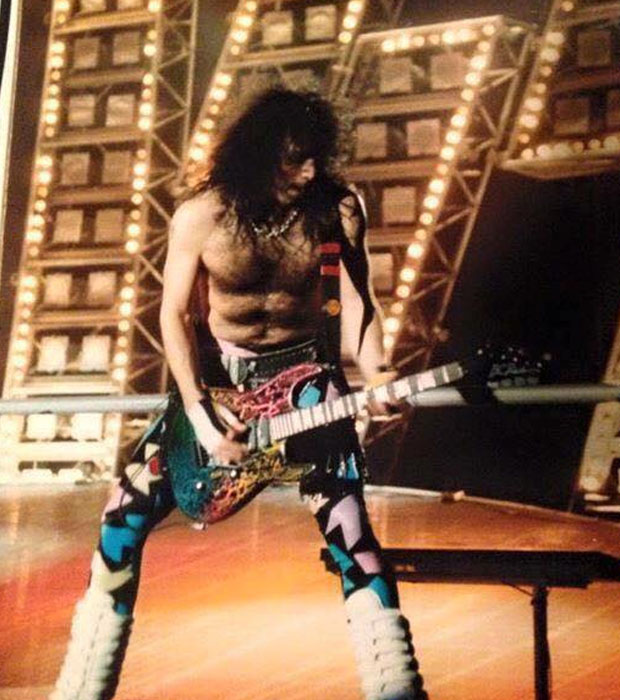
As a warm-up, let's start with the custom Gunslinger that is the least complicated. It wasn't part of the "Crazy Crazy Nights" video, but it was used during the photo shot for the tourbook and it seems to be fully formed when it shows up. This one could possible have been based on the ST body shape, the edges on this guitar was more rounded than the others, but it was still very much a custom guitar. (For one thing the ST-III had three mini switches rather than a five-way pickup selector switch.) It also feels as if it might have been the first one Paul got as it didn't have the "concept" of the other guitars (more of which later).
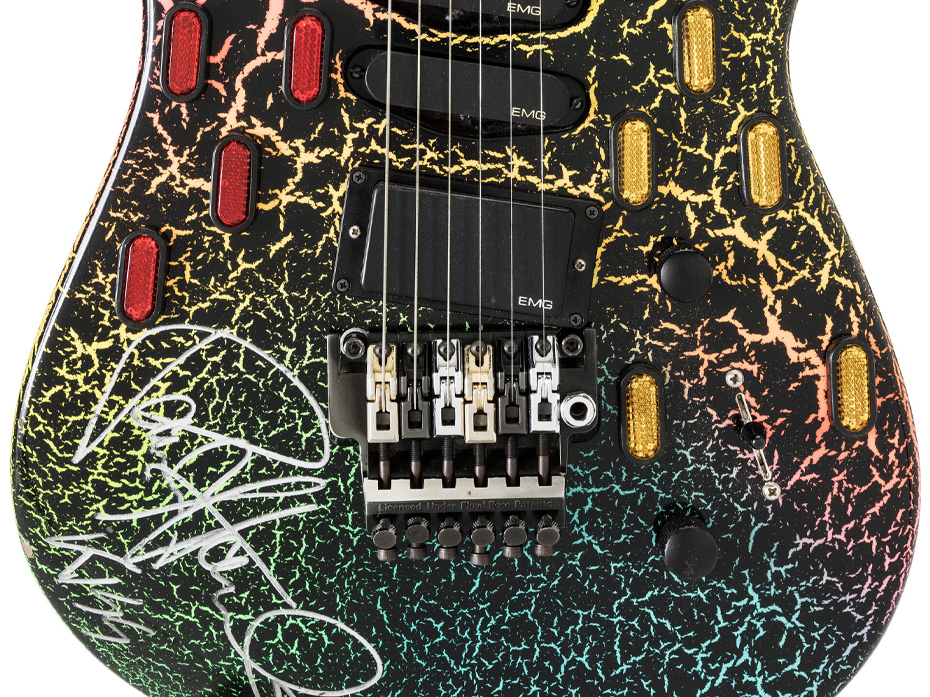
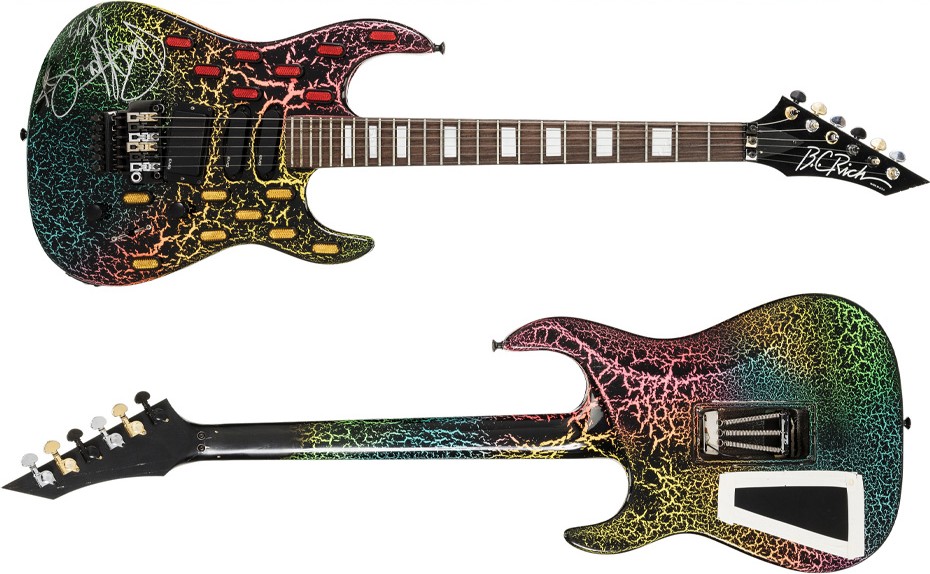
We don't know what woods were used but if the other B.C. Riches from this time is any indication it probably had a maple neck with rosewood fretboard and alder sides. Inlays were large rectangular mother of pearl. The pickups—which was a classic HSS configuration—were EMG, and the bridge was a Floyd Rose-licensed Ibanez Edge. During this time Paul began experimenting with having the saddles of the Floyd Rose in different materials and they were (low-to-high): gold / black / chrome / gold / black / chrome. There is a school of thought that the material of the saddle affects the tone, and that is demonstrably correct. (Even though I would argue that the tremolo block has a bigger effect on tone.) Brass is seen to be slightly warmer while chrome-plated steel, which was most common on Floyd Roses, had a brighter tone. But it doesn't look as if Paul used brass on any of the saddles but rather "gold"-plated steel.
Paul probably tried this because Bruce experimented with it on his Multiswirl ESP M-1 during the Asylum Tour. Bruce even changed which string had which type of saddle over the course of that tour, so he might actually have heard some difference in tone. But if we're perfectly honest here, with the overdrive and volume levels that KISS played at, there is no chance in hell that the saddle material would have made any difference to what the audience heard. I have a feeling Paul simply liked the look and that's why he tried it. Because he also used alternating colors on the tuning pegs—which were Grover Rotomatic—but there the sequence was (low-to-high): black / gold / chrome / black / gold / chrome. He even had the locking nut blocks in different colors and they matched the sequence of the tuners.
The finish was known as MCR (Multi Crackle), and according to the 1987 B.C. Rich catalog, it $25 extra. But it evidently wasn't spectacular enough for Paul because he added some oval reflectors for good measure. There were eight red ones above the strings and eight yellow ones below. (Originally there were actually nine yellow reflectors but the one closest to the volume control knob was either removed or fell off.) For some reason, this guitar began the tour with the control cavity cover not taped shut to prevent sweat from getting to the electronics, but this was soon rectified. When the tour began the knurled knobs, which had originally been chrome, had been changed to black ones.
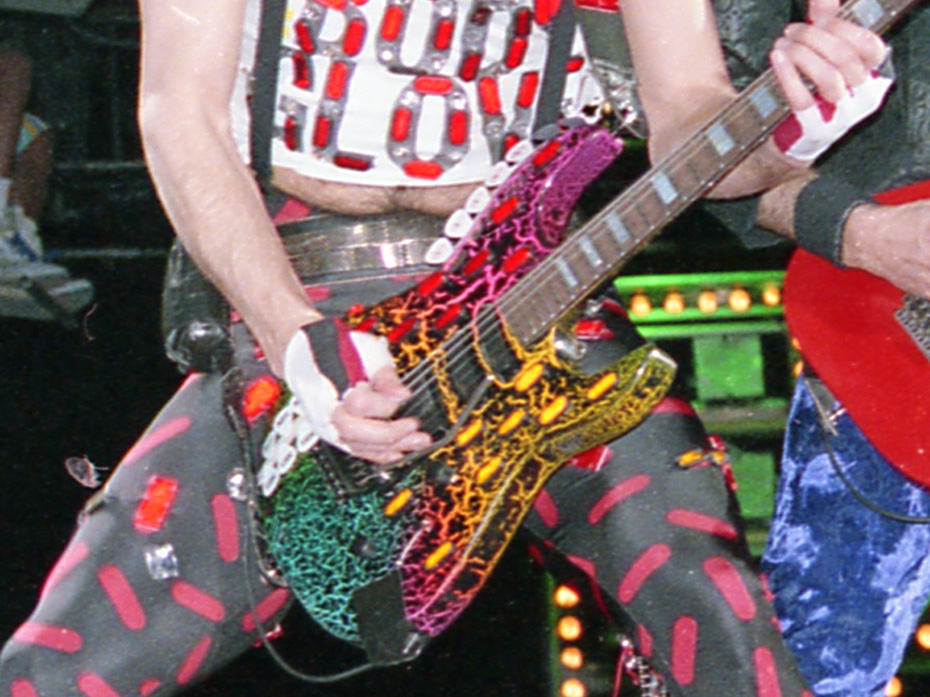
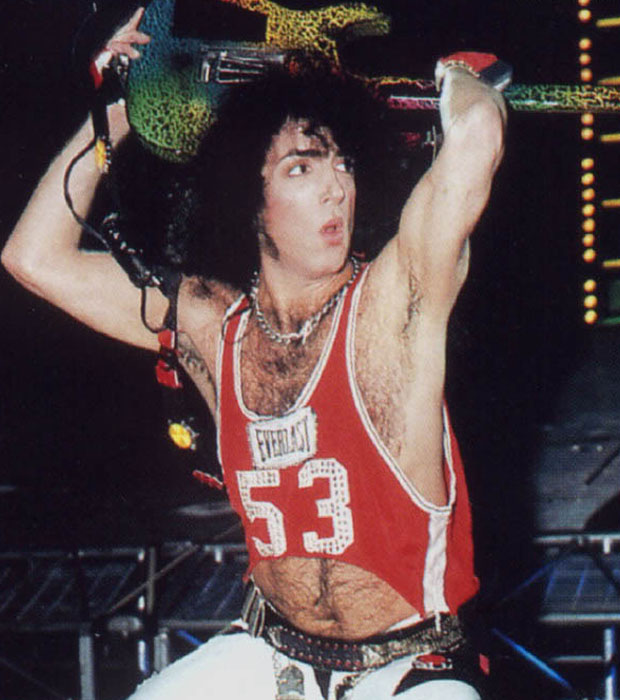
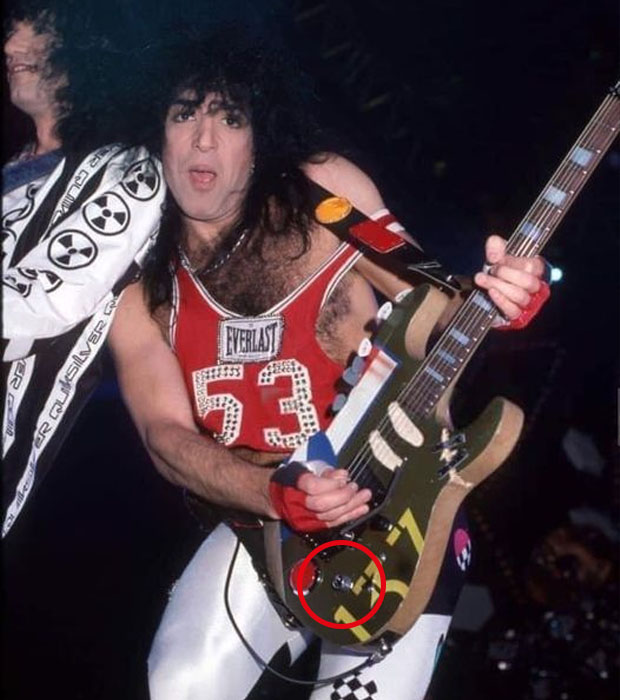
As with most of these guitars I have relatively few photos of the Colored Crackle. So far I haven't seen any indication that it was used for any of the capo songs, so it seems to have been a "general use" guitar. (In the bootleg video from Philadelphia it was used for a couple of songs.) All of these guitars went through the same trajectory during the US leg of the Crazy Nights Tour. As you can see from two of the three photos below, there was no problem just having the cable plugged into the guitar. But some time towards the end of the tour they started taping the cords to the guitar using a massive strip of tape (see photo above).
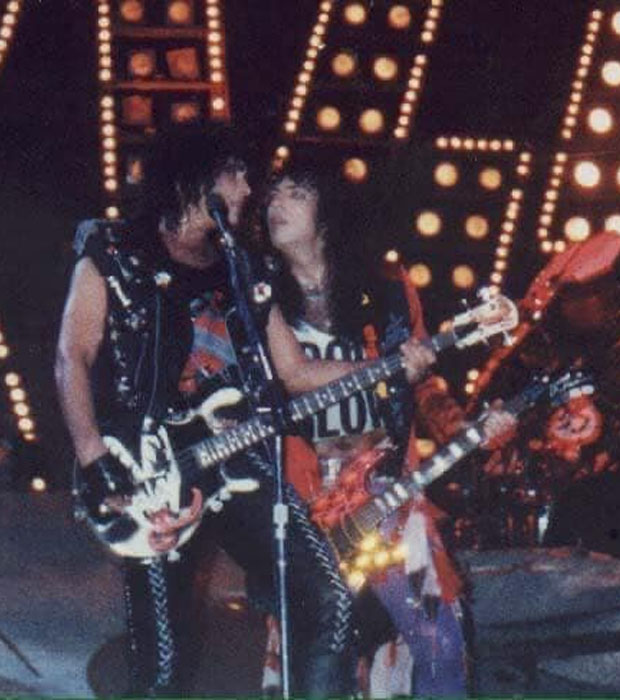
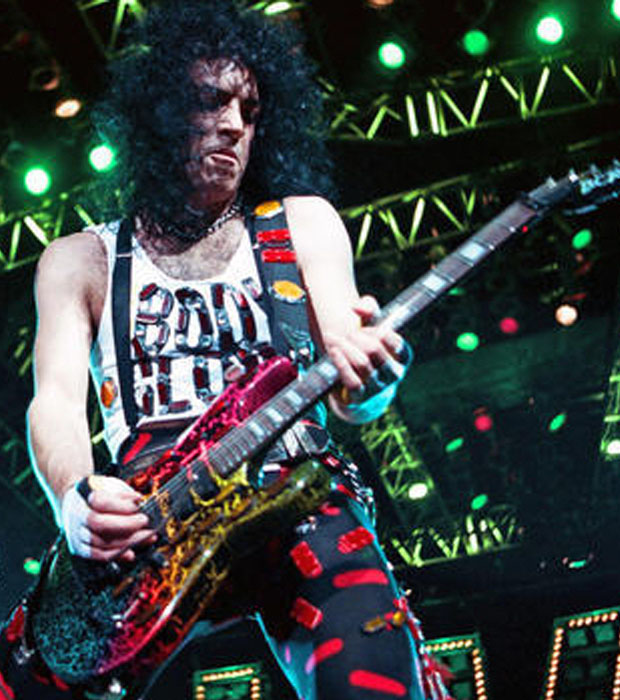
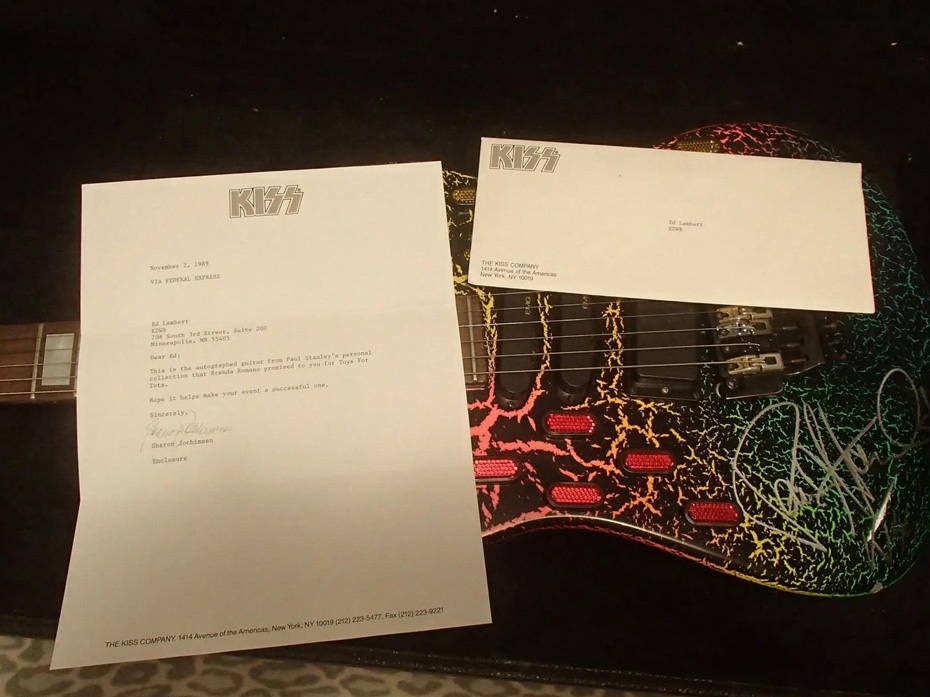
At the start of the tour it appears that Colored Crackle was Paul's main guitar. Looking at the better bootlegs from the start of the tour where it's even possible to identify guitars—take Toledo, Ohio for instance—it was used for the majority of the show. But once the Flag Gunslinger shows up Colored Crackle saw its use dwindle and it disappears after the end of the US leg. (It is not seen in the bootleg video from Tokyo for instance.) It was actually gifted to radio station KDWB-FM in Minneapolis, Minnesota in November 1989 to help they raise money for that year's Toys for Tots drive. It was later sold through Heritage Auctions in 2023.
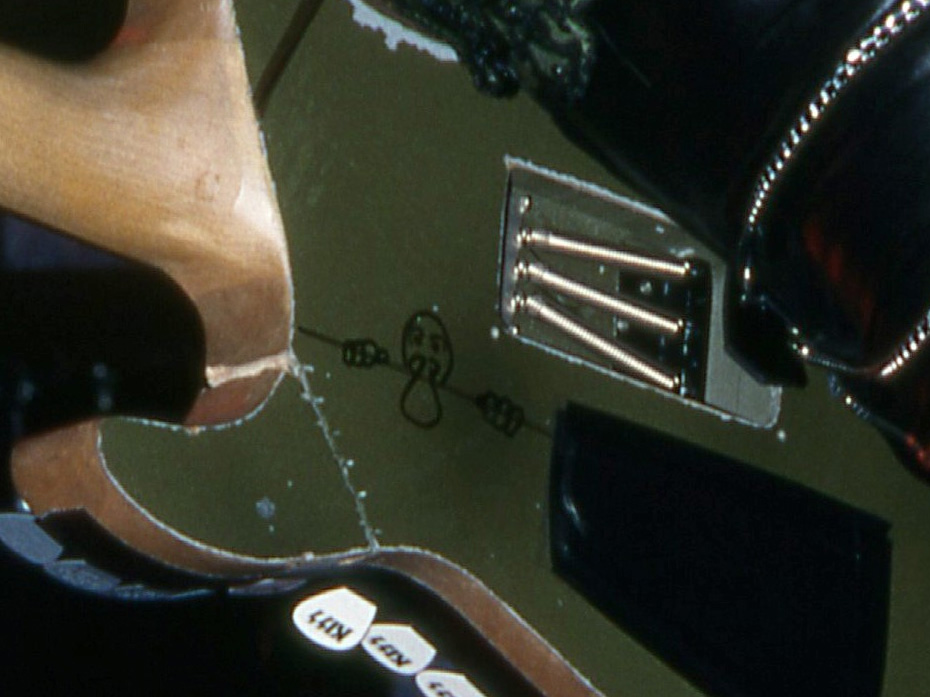
And then things get a little problematic. This is partially due to my collection having a relative lack of photos from the U.S. leg of this tour, but it's partially because the this guitar seems to have been Paul's proof-of-concept guitar and as such it—actually, they—went through some changes. I call it the Army Gunslinger even though it is a bit of a misnomer. The graphic was probably meant to invoke a classic combat aircraft fuselage, but most people will hopefully understand even if I call it Army. (I don't have any photos of this detail from this particular tour, but there was also a classic "Killroy was here"-style cartoon character on the back.)
This guitar probably had the same basic specs I guessed for Colored Crackle: maple neck with rosewood fretboard and alder sides, and the bridge was a Floyd Rose. The original version, which I only know from (poor quality) photos from an early photo shoot, had a graphic that extended over the entire body and a full set of pickups. The pickups seem to have been a regular humbucker while the single coils look like they were "rail type" dual coil (so, effectively humbuckers in a single coil guise). It also shows an odd detail, a fake "crack" in the lower horn which has been patched up with two small joint plates. This concept of broken and repaired would be applied to several guitars during this tour. I'm not at all sure what Paul had in mind with that or how, if at all, it related to the overall image.
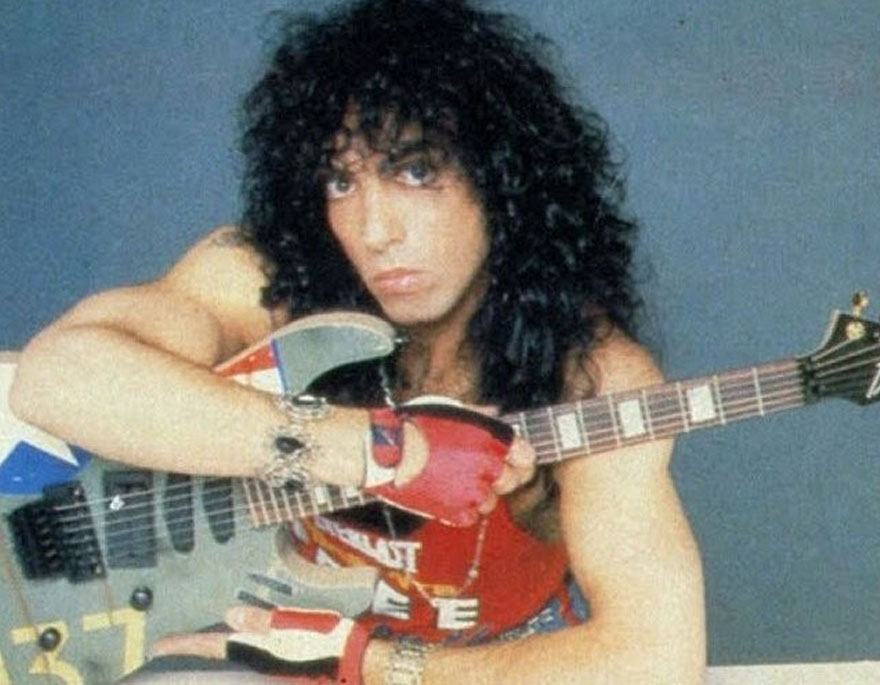
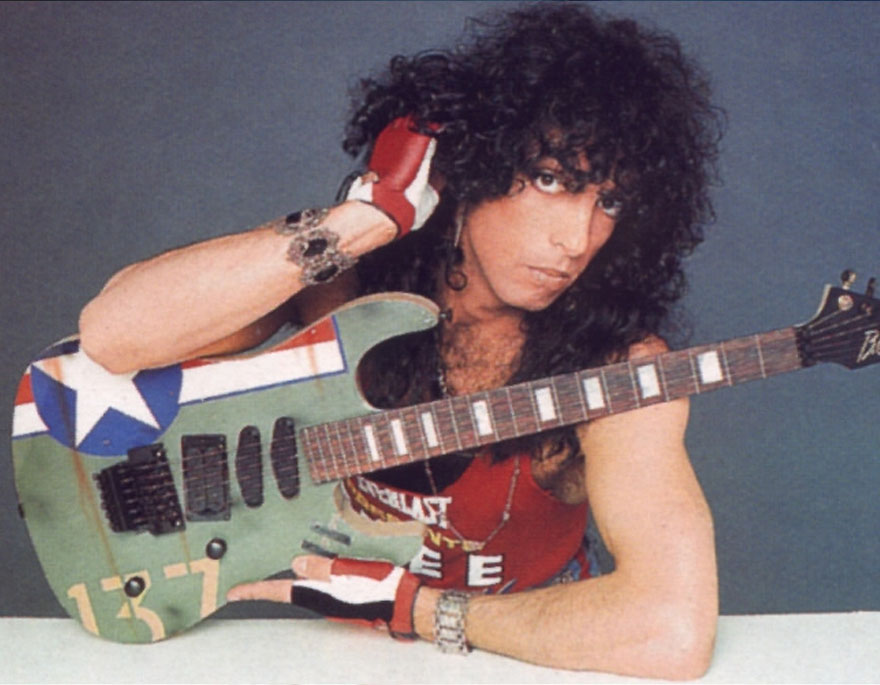
Now, I think that the photo shoot guitar above is the one that showed up or the "Crazy Crazy Nights" video shoot, but I can't be sure. It shows the same graphic but it had been sanded down to bare wood around the arm bevel, there was a large circular orange reflector behind the bridge, and the middle pickup had been removed. What bothers me even more is that it showed up looking like below a little later. And it can't have been much later either, this image was published in the September 17, 1987 issue of Kerrang. Same basic look but now with a five-way switch added. (And to lay to rest a common question: no, there was not a third Army graphic B.C. Rich with colored inlays.) It's obviously a modification that is simple enough, the cavity is already there so it's not a big job. But it feels odd that there was no switch from the start.
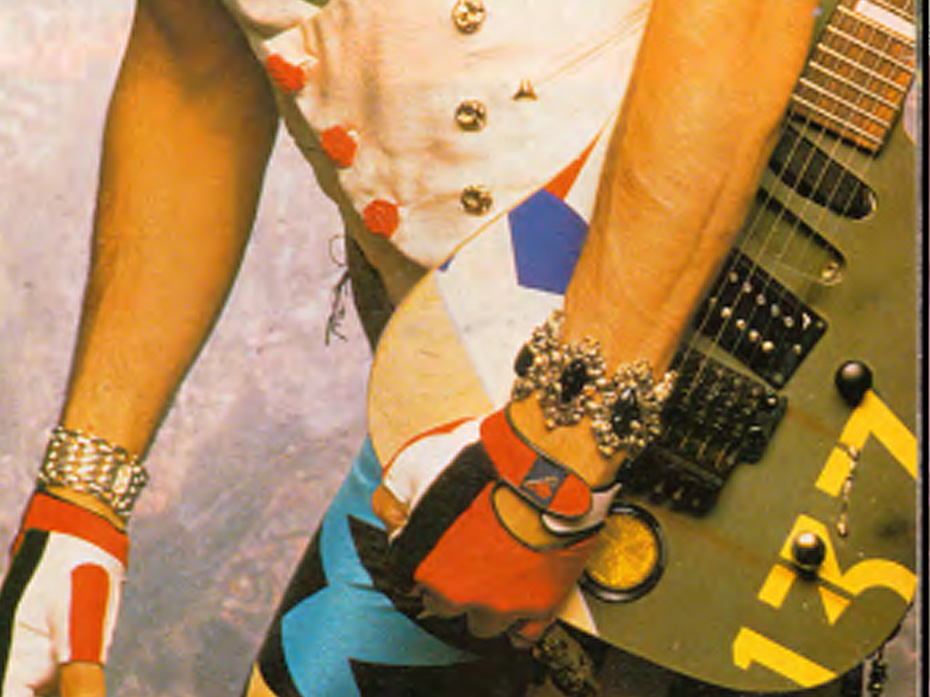
That said, looking at the history of Paul's guitars this was really just par for the course, there were modifications made to almost every single guitar he played. But the Army discussed so far bothers me because it wasn't the one Paul played live. The guitar he used live looked like below. It had a red reflector (rather than yellow), no single coils at all, and the pickup cavities were painted white. And although you can't see if under Paul's right hand, the humbucker was an EMG. The graphic, although deceptively similar, was slightly displaced and it had two "airbrushed" red lines across the white section at the top (rather than one). The sanded down section on the arm rest bevel was a different angle. The knob placement was different and the fretboard on this live Army had 22 frets while the photo shoot Army had 24. (Having 22 frets was definitely an anomaly when it comes to Paul's B.C. Riches.) Lastly, the fake "break" on the lower horn and the two joint plates used to "repair" it were different.
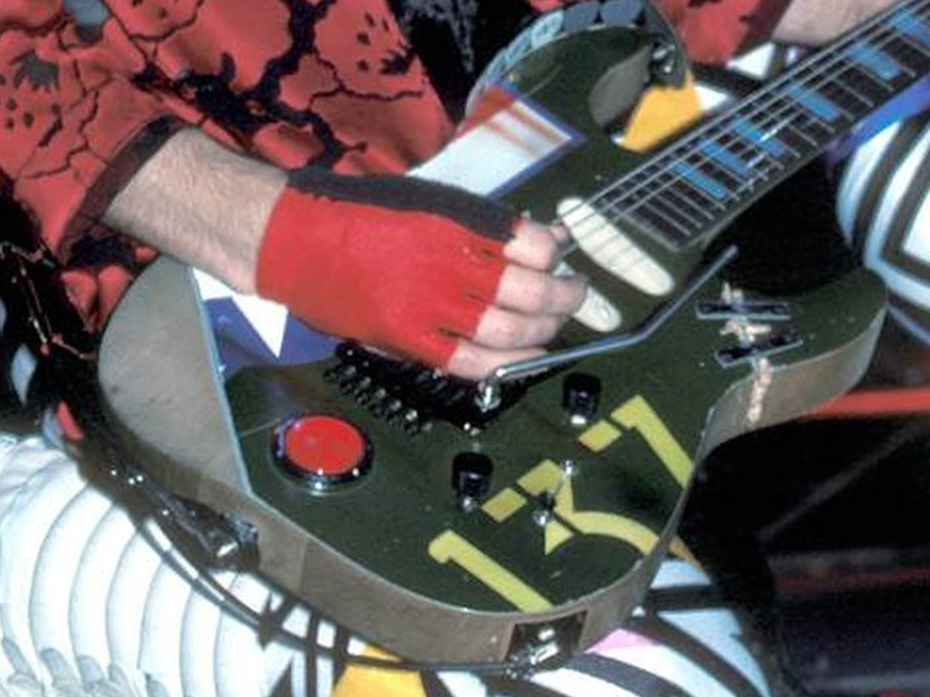
Army doesn't appear to have had a specific role. In a few photos it shows a capo, in others it doesn't. If you look at the bootleg video from Tokyo in April 1988, Paul used it for both "Bang Bang You" (capo at the 2nd fret), "Crazy Crazy Nights" (capo at the 3rd fret), and "Black Diamond" (no capo). It doesn't appear to have been as popular as the Flag Gunslinger (see later), but it was probably the second choice most nights. You'll note that Army didn't have the alternating saddles in the tremolo, but it did have different color Grover Rotomatic tuning pegs which were (low-to-high): gold / black / chrome / gold / black / chrome.
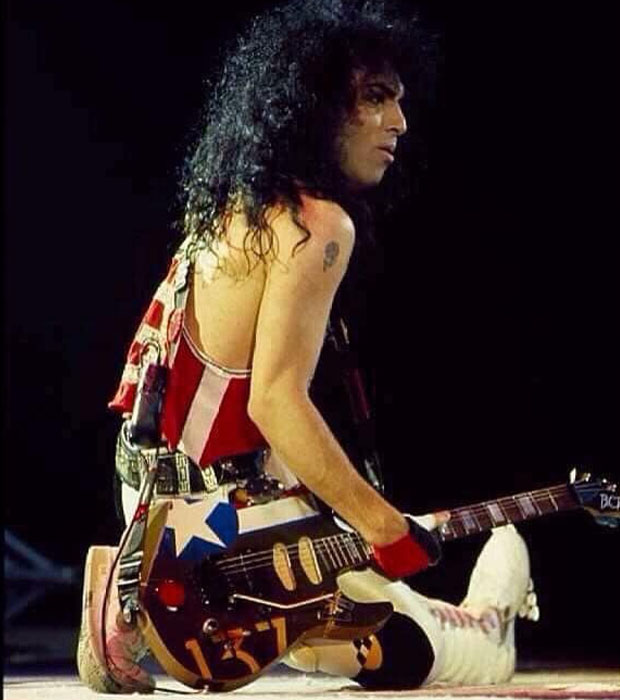
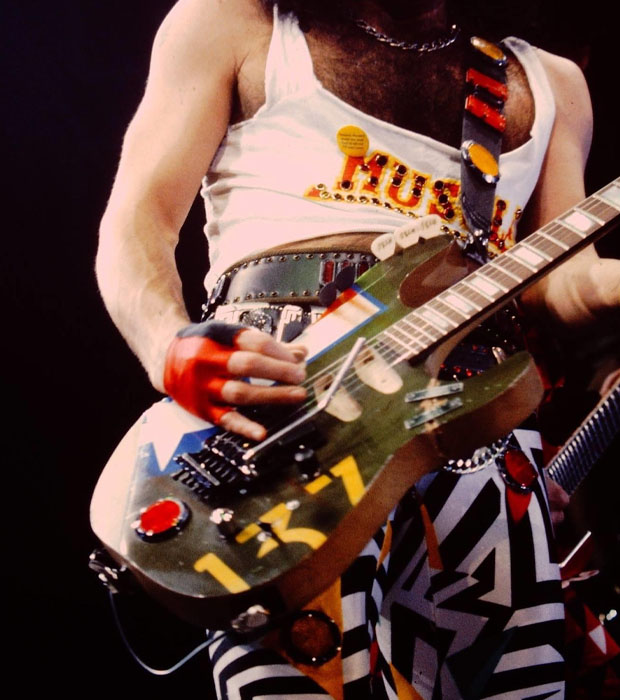
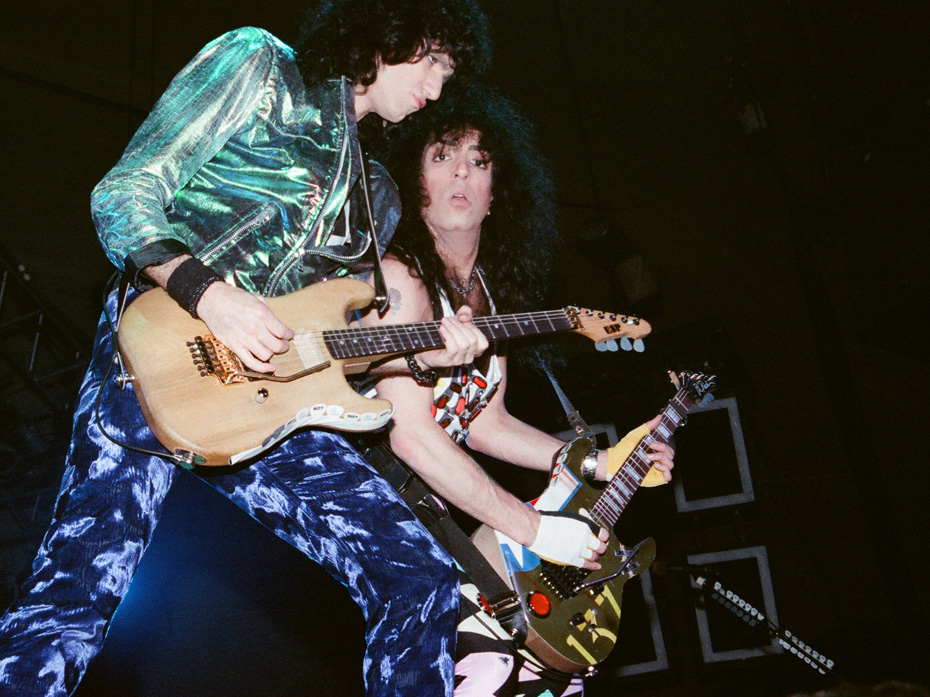
If you didn't pay 100% attention to the photos above you may have missed that the tone knob was changed in mid-January. At the start of the tour it was chrome, but by the time they hit Richfield on January 15 the chrome knob had been swapped for a black one that matched the volume knob.
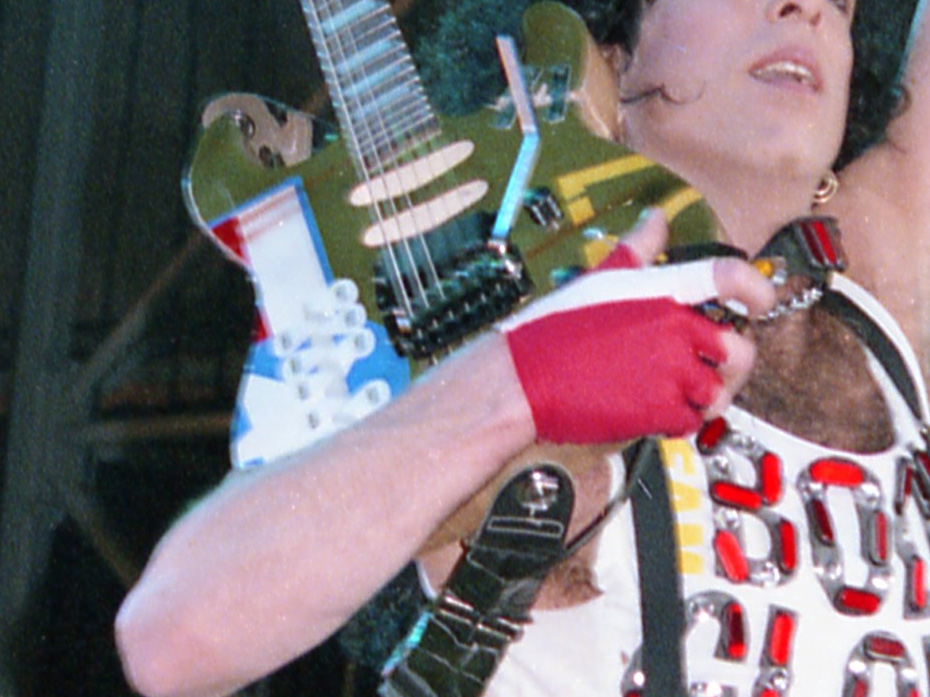
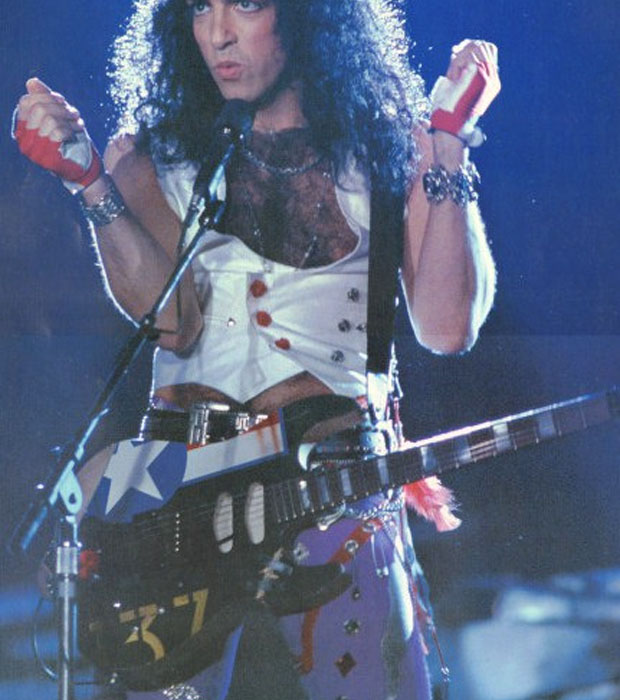
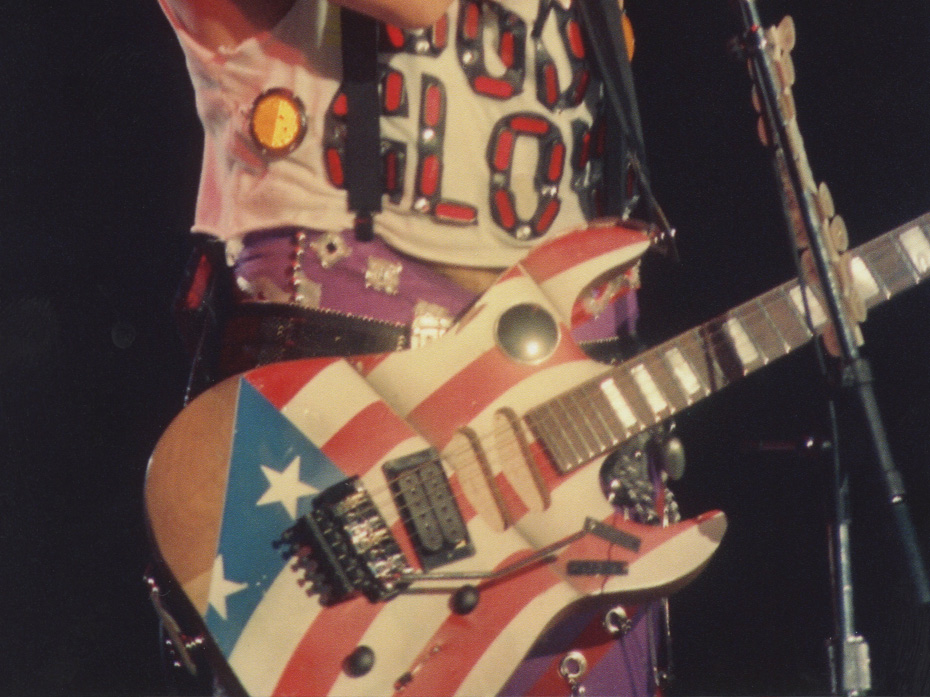
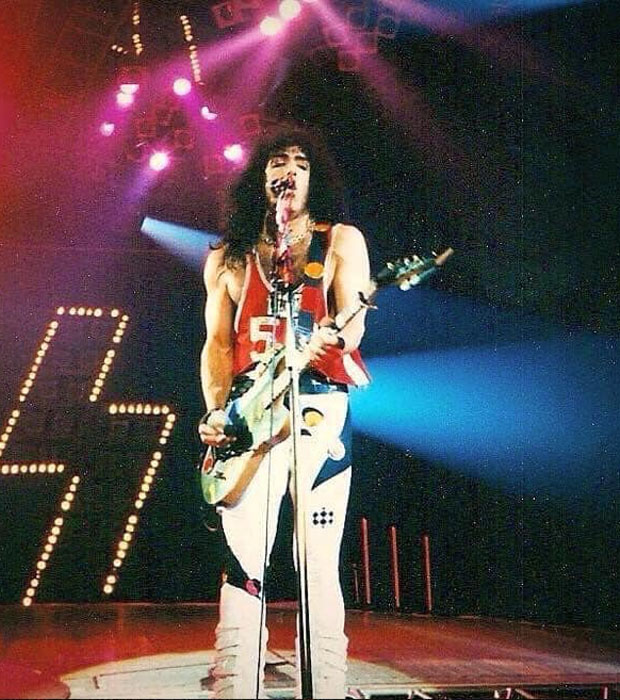
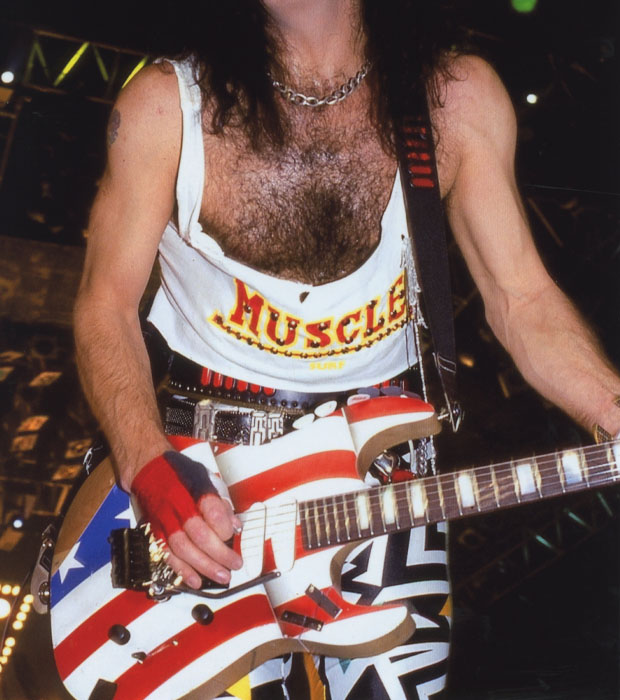
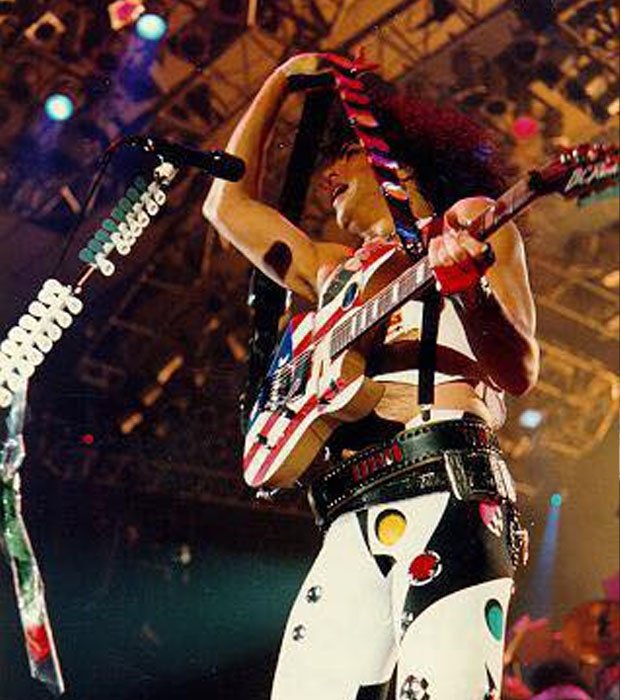
This version, which featured a Stars and Stripes graphic, seems to have been Paul's favorite. It's the guitar he was pictured with the most and if you check the bootleg videos I've referenced so far you'll see that it carried the majority of those shows. But it showed up late. The bootlegs from the start of the tour are, by and large, pretty poor in quality (at least those in my collection) but as late as Toledo, Ohio on December 7, 1987 there is no sign of the Flag Gunslinger. As far as we know it didn't join the fray until December 11, but by December 18 it had already taken over as the clear number one.
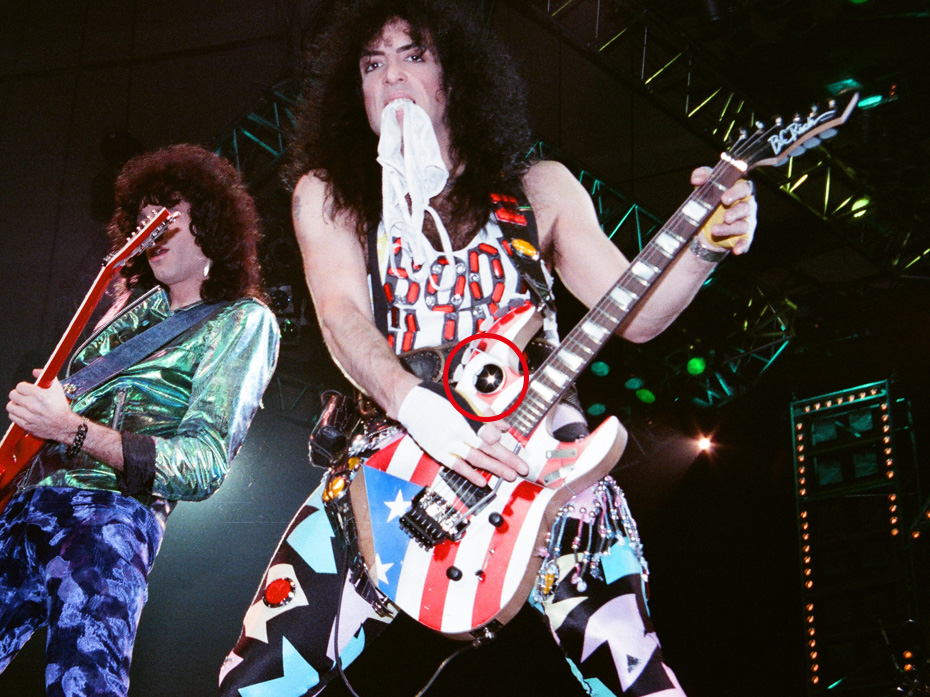
This guitar had the same basic specs as the previous ones: maple neck with rosewood fretboard and alder sides, a Floyd Rose-licensed Ibanez Edge, and (although routed for a HSS pickup configuration) a single humbucker. For some reason, the Flag Gunslinger didn't have an active EMG pickup but rather some type of regular pickup with pole pieces. It also had the same saddle color combination as Colored Crackle (low-to-high): gold / black / chrome / gold / black / chrome. For some unknown reason the color combination of the Grover Rotomatic tuners didn't match any of the other guitars but was instead (low-to-high): black / chrome / gold / black / chrome / gold. The locking nut block colors matched the sequence of the Floyd Rose saddles.
When the Flag Gunslinger joined the ranks it wasn't quite ready. As you can see in the Mark Kurtzner photo the singe coil routing had some blotchy red streaks, probably due to poor masking during the finishing process. This had been fixed by December 18 in Philadelphia so that the single coil cavities were just white. And before the end of the year there was a round convex mirror added on the upper horn, right above the fretboard.
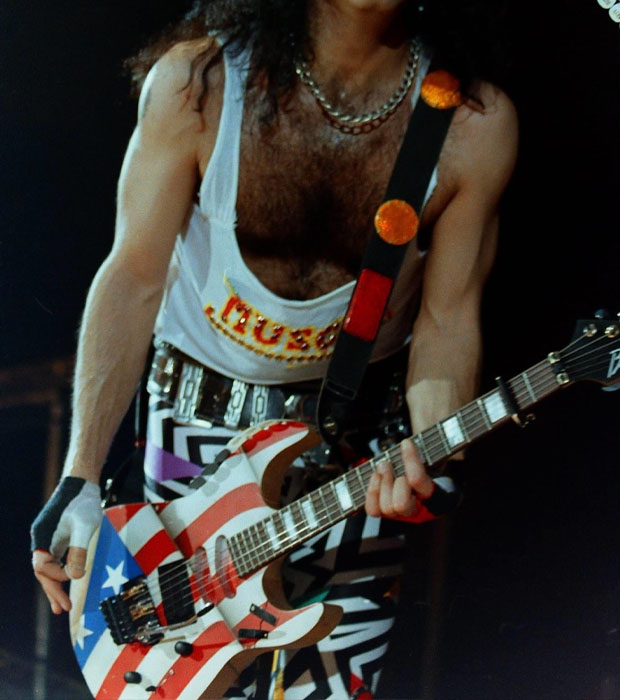
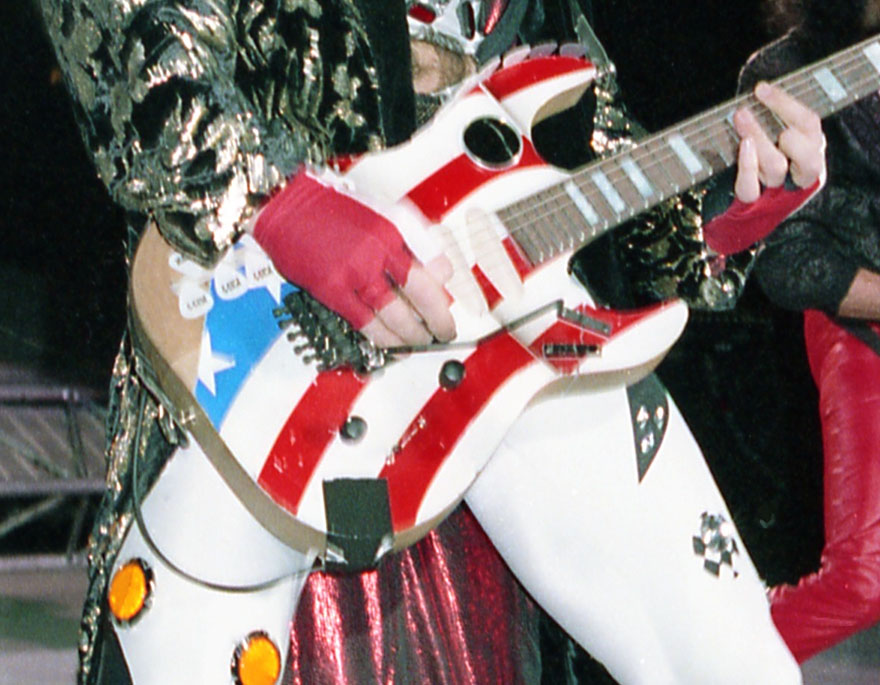
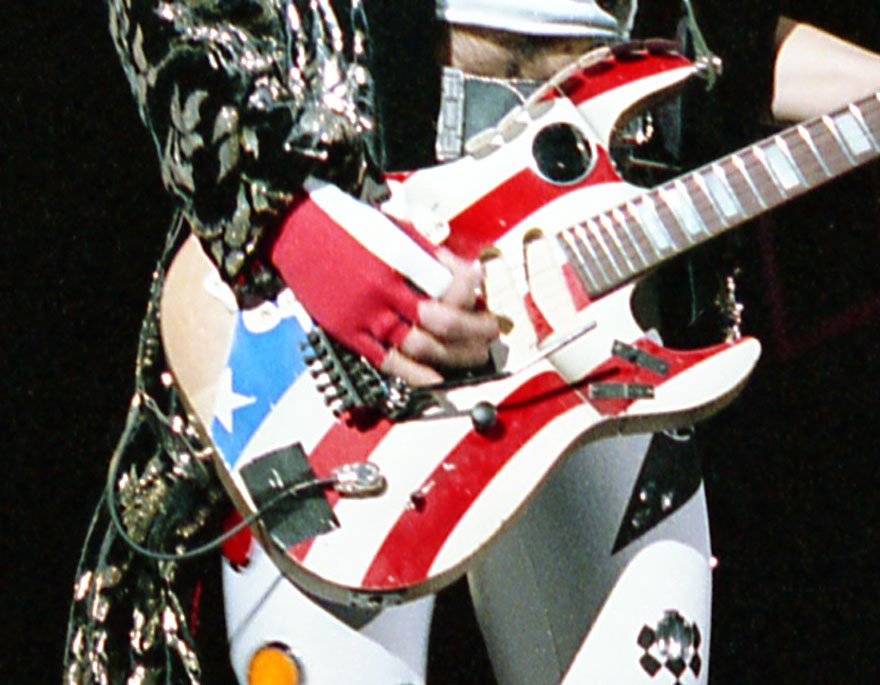
You'd think that was enough for one tour, right? Wrong. As seen above, some time in late January or early February, Paul started aggressively taping the cable to the output jack on all his B.C. Riches. But for the Flag Gunslinger this escalated, at least temporarily. As you can see from the Rikard Göransson photos below, at one time during the tour they had to relocate the output jack to where the tone knob had initially been. When the band hit Tokyo in April the cable was back in the side output jack and the tone knob had been restored. But one has to wonder what happened to force the change in the first place, and why they didn't simply replace the side output jack? Why add a whole new output?
Once the Steinbergers made their entrance the B.C. Riches were temporarily put in storage, but some of them would eventually make their way back to the stage.
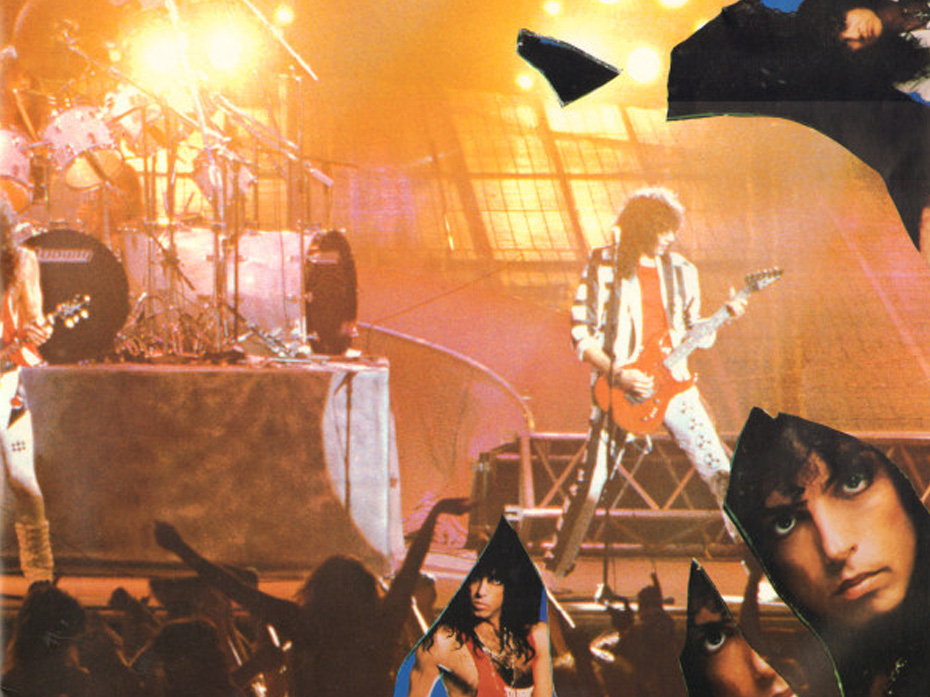
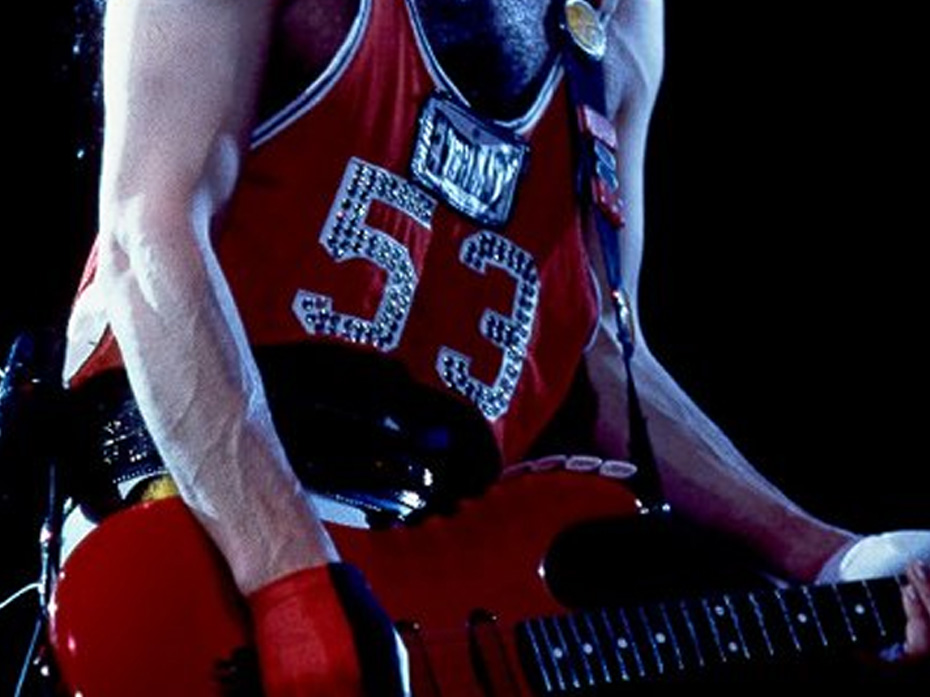
This guitar is such a rarity that it's barely documented, and I don't think it actually belonged to Paul. Bruce had a red B.C. Rich ST-III on which he had replaced the single coil pickups with red ones. (Bruce has, I think erroneously, claimed that this Red ST-III became the Red Radioactive B.C. Rich.) You can see it in the Crazy Nights tourbook and probably in this photo from the "Crazy Crazy Nights" video shoot. This guitar appears to have traveled with the band as a backup and for one brief moment, right before the Flag Gunslinger joined the tour, Paul borrowed it. You can see the red single coils in the Jerry Fielden photo below, and the bootleg video from Toronto shows Paul strapping it on for "Bang Bang You".
Under construction...